The Old Carpenter and The Door
The door weighed three hundred pounds.
It was solid walnut, carved by hand, made by a man in another province who built a few of them a year. It hung at the entrance to a wine room, and its job was to seal that room — against heat, against air, against the slow drift of a house's climate into a space that wanted to stay at fourteen degrees. To do that it carried a drop seal: a bar in the bottom rail that fell as the door closed and pressed a gasket to the floor. The hardware had been designed for a hard floor at a known height. It had never been meant to meet carpet.
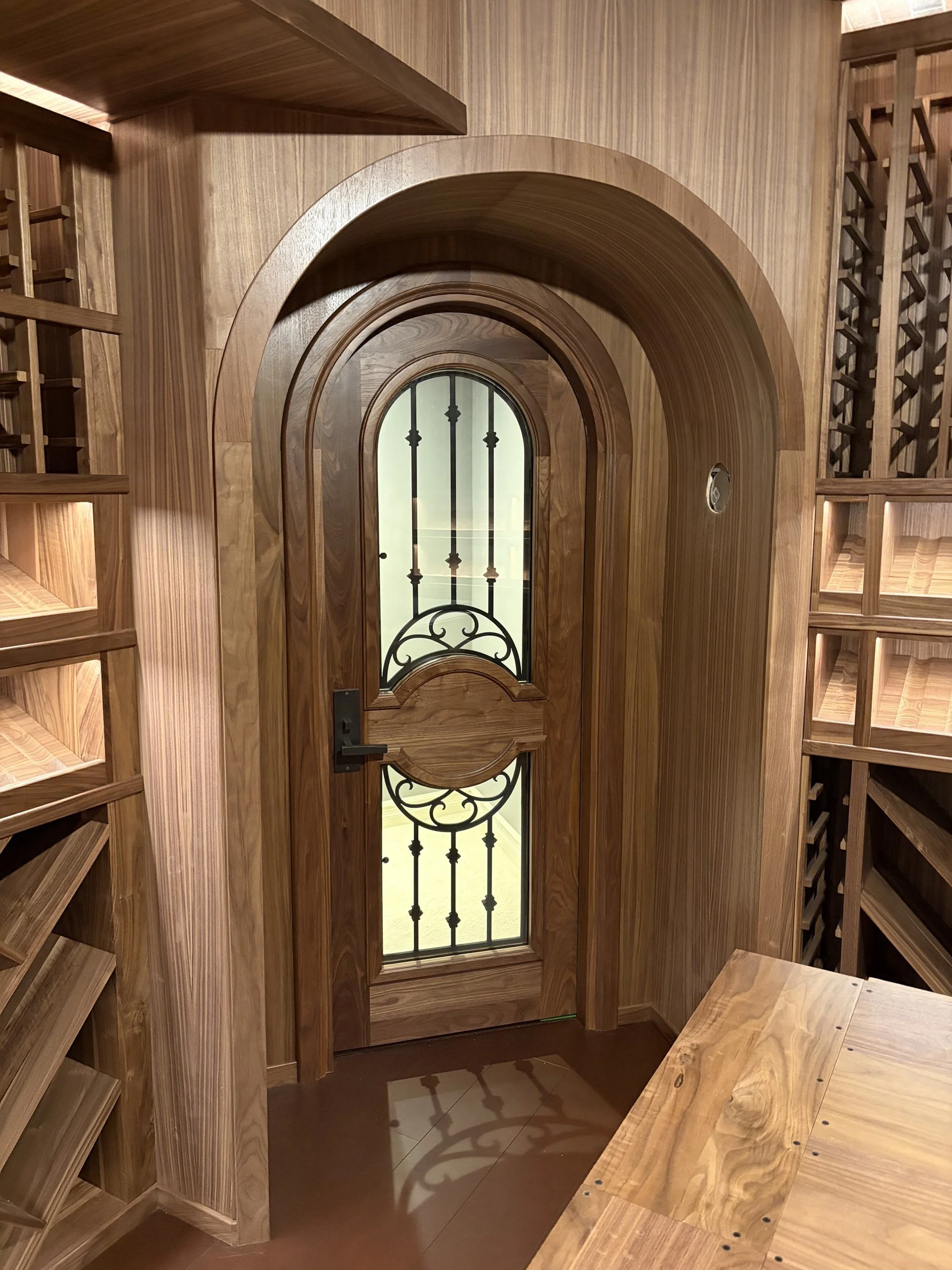
The client wanted carpet. A transition, at the threshold, where the drawings had none. It was their house. The carpet went in.
The door then did what a door does when the floor is not where it was told the floor would be. It bound. The seal dragged and would not seat. The carpenter stood in the hall and looked at it for a long time. “You are the best thing in this house and you are also the thing that will not close. We will settle this today, you and I."
A three-hundred-pound door that does not close is a wall with a handle, he thought. And it is my wall.
There were two ways out. The first was to cut the door — take three-eighths off the bottom of a hand-carved walnut slab and let the seal ride higher. It was fast. The man who carved the door would know, and so would the carpenter, every time he walked past it. The second was to move the floor.
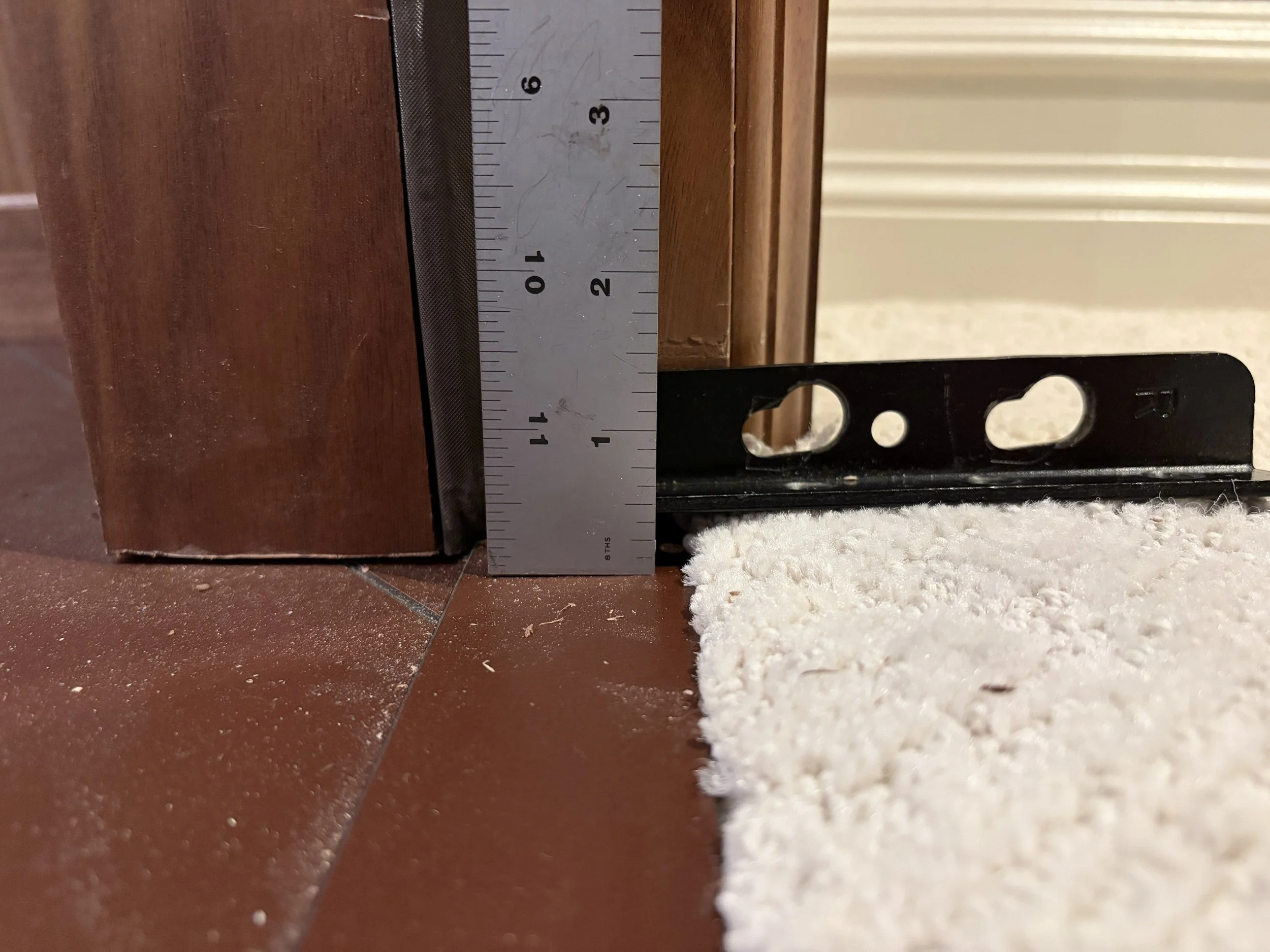
He moved the floor.
The crew was on another site that day, so the door came off its hinges with one man on it. You do not lift a thing like that. You walk it, a few degrees at a time, onto a pad, and lean it against a wall that will hold it. Slowly, he told himself. The house is empty. If it goes, it goes, and you go with it. Slowly is the only speed there is today. I am older than people think, but I am fit and I know how to handle a very heavy thing.
Then the hardware: the drop mechanism trimmed, adjusted and re-fit for the height the floor was about to become. Then the floor itself, in a finished home with the furniture in and the walls painted. The plank stripped back at the threshold and lowered by exactly three-eighths of an inch, run under the carpet so the line of the carpet never moved.
He checked it. He checked it again with a straightedge from the room side and then from the hall side. It works was not the standard. Do you know how hard this is, he thought, to do this in a finished house and leave no mark? The owners will walk over it for thirty years and never once look down. That is the whole point. That is the job.
Then the door walked back the other way, up onto its hinges, and swung.
It closed. The seal dropped and seated along its whole length. You could not see the threshold. You could not feel it underfoot. The room held its air.
It had been very hard. That was not a complaint; it was the description of the job. Most of the work was like this — a decision made by someone else, for good reasons of their own, that the work had to absorb without showing the strain. The client got their carpet. The door got its floor. The house kept the secret of how.